

A publication by
Eric Bausworth

‘A reason to believe’: How Eric Bausworth is bringing people together through magic

Eric Bausworth’s been called the devil, accused of doing witchcraft. But even he would admit that’s giving him too much credit. 

Doing magic now for over 30 years, the 49-year-old magician knows that when he makes a coin disappear or retrieves the correct card from a deck, it’s not real — he’s just doing tricks. (Though he, like most magicians, cringes at that word). 

The real “trick,” Bausworth says, is not in getting people to believe, but in having a reason to believe. 

“Everybody knows it’s not real,” he says. “The most important thing is what you’re doing it for. It’s not to learn the trick — it’s for the experience of the trick.” 

Whether or not you believe in magic is irrelevant, he notes. 

“To me, it’s the magic that people create.”

The proprietor of Old Time Magic Shop in High Ridge, Missouri — a small town just southwest of St. Louis — Bausworth is hoping to attract more young people to magic, knowing the positive influence it can have. Afterall, his own fascination with magic began at the age of 15. 

It was on a trip to Orlando for a conference for his parents’ work that Bausworth got his first taste. “The conference had a magic theme, and every night you went back to the hotel, there was a magic trick in the room,” he says. He cut his teeth on a trick called Nickles to Dimes. Placing a cup over a stack of nickels, he would “transform” it into dimes. 

“When we got home, I started looking up local magic shops to see what was going on,” says Bausworth, “and I found one right up the street.” He began playing around with items he bought at the shop, developing and perfecting his routine. “It was not just working on the trick itself, it was going through and organizing how I was gonna do something, figuring out what the next step was gonna be.”

What drew him to magic, however, wasn’t the “trick,” but its ability to connect people and spark curiosity. 

“It’s the mystery. As a magician, we feel that if people walk out trying to figure out the mystery, then we’ve done what we were supposed to do,” Bausworth says. 


Pulling people in, allowing them to see, feel and touch the magic is what drew Bausworth to in — and it’s the reason he’s focused his efforts on close-up as opposed to stage or parlor magic. Close-up magic typically involves one to six people and can include things like cards, coins and rubber bands.

“It’s a more close-up, intimate setting versus using a big stage prop or being in a big parlor,” says Bausworth. 

The differences, and costs, between each type of magic are vast — for example, buying a deck of cards for $3 or a prop for $3,000 — but to Bausworth, the most important thing is the personal component. 

“Almost everything I do, the person I’m doing it for is helping me with it or is touching the trick. Up on stage, you’re not going to have somebody walk up and start touching somebody who’s getting sawed in half,” he says. “You can talk to somebody who does stage magic and they think that if they can make something float across the stage, that’s their power. To me, it’s interacting with the person — for them to get involved.”

This proclivity for personal connection, however, didn’t always come easily to Bausworth.


As a teenager, Bausworth was shy and often kept to himself. Once he became involved in magic, however, that all changed. He found comfort and confidence in perfecting the art — which may be why his parents were so supportive of his new hobby. 

“It’s like you flip a switch and it changes you totally,” he says. “I think that’s what people realize when they start doing magic. It’s almost like you become somebody totally different. I wanted it to be like that all the time.”

To this day, Bausworth carries a “trick” with him everywhere he goes to maintain that “comfort zone,” as he calls it, and help break the ice. But the experience of practicing and performing magic, he notes, does more than raise confidence. “You’re bettering yourself for pretty much any kind of situation,” Bausworth notes. “It starts with doing the magic, but it rolls over to everything else.”

The more he did magic, the more he wanted to do it. Bausworth began to spend a couple hours each night practicing. Eventually, he began to fiddle with performing. “Seeing people’s faces and the reaction from them got me more interested in it,” he says, “so I started digging and found out there were local magic clubs.” 

Bausworth joined the two clubs he found in his area and, in the process, discovered another local magic shop on the riverfront in downtown St. Louis, called Gibbol’s. “I started going down there every weekend,” he says.

Eventually, he started working there.

For 12 years he worked behind the counter, stocking shelves, doing demonstrations — all the while becoming further immersed in what was then a thriving magic scene. “That’s where I got to know a lot of magicians and a lot of people from out of town,” Bausworth says. “That built up my confidence even more.”

He began performing at picnics and fundraisers two to three times per week while working a full-time job. At the time, restaurants could also be lucrative for magicians. “I went into the Red Lobster and I told them, ‘Look, you always have lines out here — I’ll do magic just to keep people’s patience up.’ He hired me, and I started the next day,” Bausworth says. 

Through his 30s, he spent nearly every Friday and Saturday night performing at Red Lobster and other restaurants. Until, one day, the owners of Gibbol’s announced their decision to retire and offered to let him take over the shop. Married with two kids and a full-time job, he passed on the opportunity.

For the next few years, Bausworth put magic on the backburner. 

Then, in March 2020, his wife died, prompting him to move his family back to the High Ridge area where he’d grown up and where he’d recently opened an antique store. Covid had hit, putting an end to most forms of in-person entertainment at a time when magic shops were already becoming a thing of the past. But, when a storefront in the same strip mall as his antique store opened up, Bausworth decided it was time to bring magic back to his hometown.


Though few are aware of it, St. Louis was once a thriving magic scene. Notable magicians such as Bud Dietrich, Brother John Hamman, Forrest Hendricks, John Randall Brown, David Price and Jonathan Levit (the creator of The X-Files) all have roots in St. Louis. “Levit’s dad started off doing a lot of magic here in St. Louis, and then he’s the one that taught Jonathan,” Bausworth says. 

Magic has been pursued, performed and perfected in the region since as early as the turn of the 20th century. Famed acts such as Harry Houdini could be found wowing crowds at St. Louis’ many theaters — the master of magic himself performing in 1908, what many believe to be, the debut of his famous “Milk Can Escape” at St. Louis’ Columbia theater. 

But over time, magic began to, well, lose it’s magic.

“Before Covid, we had probably 45,000 magic shops across the country, and we’re down to about 200 right now,” says Bausworth. 

In fact, it’s worse than that. According to FindMagicShops.com, as of December 2023, there were only 97 brick-and-mortar magic shops in all the United States. 

The pandemic coupled with generational differences and social media have taken their toll on an industry and pastime that demands what is increasingly hard-earned attention. 

“There’s no younger generation that’s moving up, and everybody else is 70 or 80 years old,” says Bausworth. “All the guys I worked with, when I got involved, they’re all getting older and dying off one by one, unfortunately.”

Through Old Time Magic Shop — several doors down from the first magic shop he visited as a doe-eyed magician — Bausworth hopes to change that. He’s begun offering classes where people of all ages can come to learn magic alongside and from other novice magicians.

“Everything’s online now, and people don’t want to buy anything without touching it, seeing it, feeling it. That’s kind of my whole point,” Bausworth says. “I want them to come in, see us do demos, be able to touch and feel it — because you can’t do that online. I think that’s why a lot of kids aren’t getting involved.”

He refuses to tell someone how a trick is done until they’ve bought it, for the simple reason that it takes the magic out of it. Practicing the delivery is essential as well — “otherwise, you’re just exposing the trick,” Baussworth says. 

Magic, he believes, is an art, and art takes time. Perfecting a single trick, Bausworth says, can take as long as six months. “A lot of times when somebody sees an effect and then they see how it’s done and they see how simple it is, or it’s not what they expected, that’s a big turn off to them,” says Bausworth. “So you gotta understand the art and what you’re actually getting into.”

Through his Magic Get-togethers, this is what Bausworth is trying to do. He’s bringing people together — those who are inspired to perform (or simply inspired by) magic — to practice, perform, perfect and understand magic — and the reason for it. 

“I had a guy that came in one day and he was like, ‘I’ve had the worst day ever’ — because he was just diagnosed with cancer — but he came in, and it totally changed his whole mood. He walked out of here and was like, ‘I’ll be back. This was the best thing I’ve ever seen,’” Bausworth says. “One little trick changed his whole outlook on that day. That’s what I’m looking for.”

Bausworth, like his colleagues, may be a dying breed, but through his shop, he’s keeping magic alive in his own small way — giving people a reason to believe, as he says.

“A lot of people have never experienced what magic really is, other than seeing it on TV. And that’s what magic shops are hopefully going to come back and do,” says Bausworth. “Am I gonna get rich doing this? I’m not. But if I can get people to understand and enjoy magic, that’s what it’s all about.”

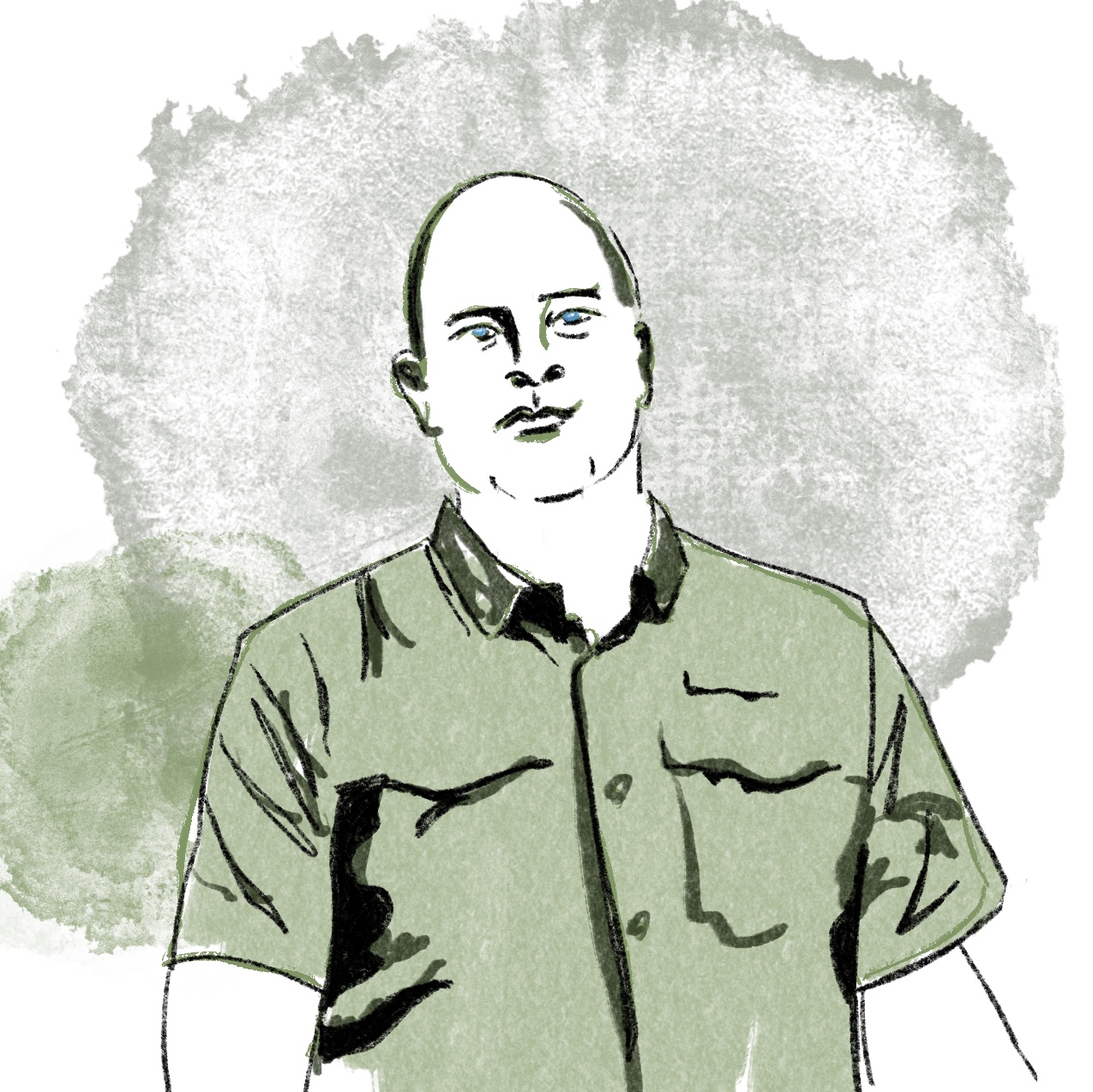
Illustration by Abigail Katherine Rose (@abigailkatherinerose).


At Anecdote, we believe in the power of stories to connect people with one another and brands. We believe everyone has a story worth telling. Want to share yours or have a tip? Email us at info@weareanecdote.com.
‘No regrets’: How Larry Anderson learned to let go of the past and live for the moment

“An awareness of the reality of the moment.”

That’s Larry Anderson’s motto and the way in which he’s lived his life for the past 56 years. Acknowledging what is real — not what he wishes or hopes to be real — and recognizing that the past is just that.

“All I have is this moment right now. If I’m not satisfied with something, I need to change it,” he says. 

Eighty-six years old, Larry lives in High Ridge, Mo. — a town of about 4,300 people just southwest of St. Louis — tucked in the back corner lot of his subdivision, surrounded by what he loves most: the woods, his wife Shirley and his favorite memories (photos from his wedding day, trips in his 1946 Stinson airplane, camping and hiking trips in Rocky Mountain National Park). With fewer years remaining than those he has filled, Larry seems, if not happy, at least accepting of and comfortable with the life he has lived. 

But that wasn’t always the case.


“It was my 30th birthday,” Larry says. “I still remember it like it was yesterday.”

He recalls sitting on the couch in his then-home in Hazelwood, Mo., when time seemed to catch up with him.

“I thought, ‘I’m 30 today. What happened to my 20s? I feel like the world has gone by me and I’m not on it,’” Larry recalls. “I didn’t feel like I had lived my life fully, like I really wanted.”

That day, he decided he didn’t want to live with any more regrets. He’d gone down certain paths and avoided others, often with little thought given — selecting those he did for their ease and comfort — but now, he decided, he was done.

“I did a lot of things. I did learn a lot along the way,” Larry says, “but I thought, ‘There’s more, there’s gotta be more to it than this.’”

For Larry, the future had always been a question without a definitive answer — a series of largely meaningless jobs and events. But now, things would be different.


Born in Swampscott, Mass., Larry grew up in the steel mill towns of Ohio and Pennsylvania, where his father worked as a supervisor. His family eventually made their home in Beaver Falls, Penn., where Larry and his brother Gary attended Beaver Falls High School. 

At this age, Larry began to notice some pointed differences between him and his brother.

“I was too shy to communicate with the other kids. I had a hard time — my brother didn’t,” says Larry, smiling. “He always amazed me. He just did whatever he wanted to do — did it without even thinking about it.”

While Gary was spontaneous, making decisions quickly in the moment, Larry took his time. “Most of the time I was taking too much time to make decisions,” Larry says. (Each one later admitted to admiring the other for their approach to decision-making.)

The more introverted of the two, Larry found an outlet in band. “I wasn’t interested much in high school. I wasn’t making really good grades,” he says. “I just didn’t have the interest, except when I started playing trombone.” 

His father bought him his first trombone, and it became his first true passion — one that helped pull him out of his shell and earned him his first A. “That was my comfort zone in high school,” says Larry. 

But, as he neared the end of high school, the question of what to do for a career loomed large for Larry. His greatest role model, his father, had worked in steel mills all his life, and Larry had seen the effect it had on him.

“When he’d come home, you could tell his mind was still back at work and decisions to be made. He lived for his job, and he brought his work home with him, so he treated Gary and me like we were employees,” he says. “He cared about us and was supportive of us — but I guess nobody’s perfect. We didn’t hear any compliments or ‘attaboys’ from our dad. I realized then that jobs can be an influence on your home life.”

His own path, Larry decided, would be different. Yet, he still wasn’t sure what that path would be.


Since the age of 5, Larry had been interested in airplanes, and a book he read in high school sparked his interest in Alaska. So when the time came to start thinking about his future, he thought, why not fly planes in Alaska?

“I was always interested in aviation, flying airplanes, as long as I can remember,” Larry says. “Airplanes just fascinated me, and I thought, ‘I need to get a job flying an airplane.’ I had read a book about Alaska called Into the Wild — they call them bush pilots in Alaska — and I got to thinking, ‘Maybe I can do that?’”

But before he could act on that idea, another one came to mind: forestry. 

It was a time when I wasn’t really happy. So, I’d go up to the woods and just walk around. It gave me peace of mind.

While living in North Lawrence, Ohio, years earlier, Larry would often explore the woods on the farm behind his family’s house to get away. “It was a time when I wasn’t really happy. I was shy, couldn’t make friends — or didn’t know how to make friends,” he says. “So, I’d go up to the woods and just walk around. It gave me peace of mind.”

He loved being in the woods, so why not make a career of it? Manning fire towers sounded like an easy and great way to spend time in the place he loved most. The job might require him to go out West or even to Canada. In Larry’s mind, there wasn’t a better job in all the world. “I got all excited thinking about that,” he says. 

He got to planning. First, he would have to go to college. But before that, he would have to take a class in a foreign language — an unsavory prospect for someone who was “having trouble enough with the English language,” Larry says. Still, he found himself signing up for French the following semester. 

“I went to the first class, and the teacher was patient with all of us because she knew we didn’t know anything,” he says. “She taught us a few French words and phrases — Bonjour, monsieur. That’s about all we learned that first day. But it was enough to convince me, I cannot take this class.”

“So, that day cut that idea off,” Larry says. “No more forest ranger.”


Larry graduated that May and took a job working in the produce department at the local supermarket, Pennsylvania A&P. “I couldn’t get excited about the job at all,” he says. Fortunately, the experience was short-lived. 

It was 1954. The Korean War had just ended the year before, and Larry saw an opportunity. 

Knowing he had to sign up for the draft, he contemplated enlisting: If he waited till he was 21, another war might start up — who knows where he would be. But, if he enlisted in the Army, he would have to commit to three years, whereas if he were drafted he would only have to serve two years. 

“When I went to the draft board, I’ll never forget the lady —  I love that woman,” says Larry. “I said to her, ‘If I wait to get drafted, I’ll be 21 years old. I don’t know if I’ll be settled into a career or a relationship, and I won’t want to leave at that time. But, if I enlist now, I have to go in for three years.’ She said, ‘I’ll tell you what I can do for you. I can put your name at the top of the draft list right now. You’ll go in right now, and you’ll only have to go in for two years.’” 

“She gave me a year of my life,” Larry adds.


At the end of basic training, Larry was once again faced with a decision. He could select from one of four Army jobs: military policeman — something Larry couldn’t see himself doing; technician — “climbing poles and stretching electric wire,” he says, which didn’t interest him at all; clerk (“I could not see myself sitting at a desk day in, day out,” Larry says); or cook. 

“I had no interest in cooking,” he says. “So, I said to the counselor, ‘Well, I’d really rather go to mechanic school.’ He said, ‘Yeah, I can do that.’”

The takeaway for Larry: “If there’s something you want, it doesn’t hurt to ask for it,” he says.


Larry was assigned to a base in Straubing, Germany, northeast of Munich, near what was then the Czechoslovakian border. His unit was there to help the Germans protect their borders from Russia, should it try to invade. Larry ended up spending most of his time on hobbies — building model airplanes, doing some leather work and riding his bicycle. 

“On weekends, they had tour buses that would go to different German towns or castles. I bought a bicycle and, with it, I traveled around Germany by myself,” he says. “I’d take the tours with the other G.I.s — some of them had their wives with them, too — and then I’d pedal back.”

At the end of his two years, Larry had 20 leave days saved up. With those, he traveled to Holland, England, France and Ireland — the latter he was so fond of he spent 11 of the 20 days there. 

“I got out of the Army, and my time was not a complete waste,” says Larry. “I had the chance to tour Europe, I learned more about mechanics — and I got my military time over with was the main thing.”


Back at home, his relief over the completion of his military service was tempered by that lingering question: What are you going to do with your life? Ignoring the voice for long enough to buy his first motorcycle, a Harley Davidson, Larry took a job at the Seven-Up Bottling Company in Beaver Falls. Then, it was on to the local steel mill, where, with the help of his father, he’d procured a job as a heat treater. A good-paying job, it was Larry’s first experience working a swing shift.

“One week, you work the first eight hours of the day during the day, the next week you work the evening shift, and the next week, you work the midnight shift,” he says. In addition to messing up his sleep cycle, the job was utterly boring. “The hardest part was staying awake,” Larry says. 

But it was good, easy money, and for the first time, Larry was able to pursue some of his long-delayed interests. He took flying lessons, he bought an old Mercury convertible that he fixed up and another, nearly brand-new Harley. 

Within a year, Larry learned he was going to be laid off — the result of Japanese companies processing steel for a lower price than those in the U.S. The knowledge of his imminent firing set Larry’s mind in motion. Where would he go now, and what would he do? The West still called to him — perhaps now he would actually make it out there.

I’m sure you’ve heard the saying, from the pioneer days, ‘Go west, young man’ — so I did.

“I had some money saved up, so I sold my motorcycle and threw my suitcase in the car,” Larry says. “I’m sure you’ve heard the saying, from the pioneer days, ‘Go west, young man’ — so I did.” With his mind set on the Rocky Mountains of Colorado, he hit the road.

Halfway between the low hills of Beaver Falls, Penn., and the towering mountains of Colorado, he made a pitstop. Amongst the farmland of the Midwest, surrounded by the Mississippi Delta, reality began to set in for Larry. “I thought, ‘Wow, this is pretty far from home. I don’t know what I am doing. I don’t know anybody here. I don’t know anybody west of Ohio,’” he recalls.

He got a room at the YMCA in downtown St. Louis — the future weighing heavy on his mind — and decided to have a look around. If he didn’t find anything that interested him, it would be back to the road and on to Colorado.

“I didn’t know how long I was gonna be there, didn’t know my future,” Larry says. 

Twenty-two years old and not sure what he was doing or where he was going, Larry was reminded of one of his favorite songs by Neil Diamond: “Well I’m New York City born and raised / But nowadays / I’m lost between two shores … ‘I am’ … I said / To no one there / And no one heard at all / Not even the chair.” 

“That’s how I felt when I got into my room at the YMCA,” Larry recalls, “not even the dresser heard me, not even the chair.” 


Inspired, in part, by St. Louis’ ties to aviation, Larry decided to stick around a while — but, first, he would need a place to stay. Driving around St. Louis County, he stopped in the small, walkable community of Kirkwood, about 5 miles west of St. Louis City. He found a room for rent with a couch to sleep on and a job at Steak n’ Shake. 

“The room had no heat,” says Larry, “and in the winter time, there was snow coming inside the windows piling up on the window ledge.”

One day, while working at Steak n’ Shake, he met Shirley. 

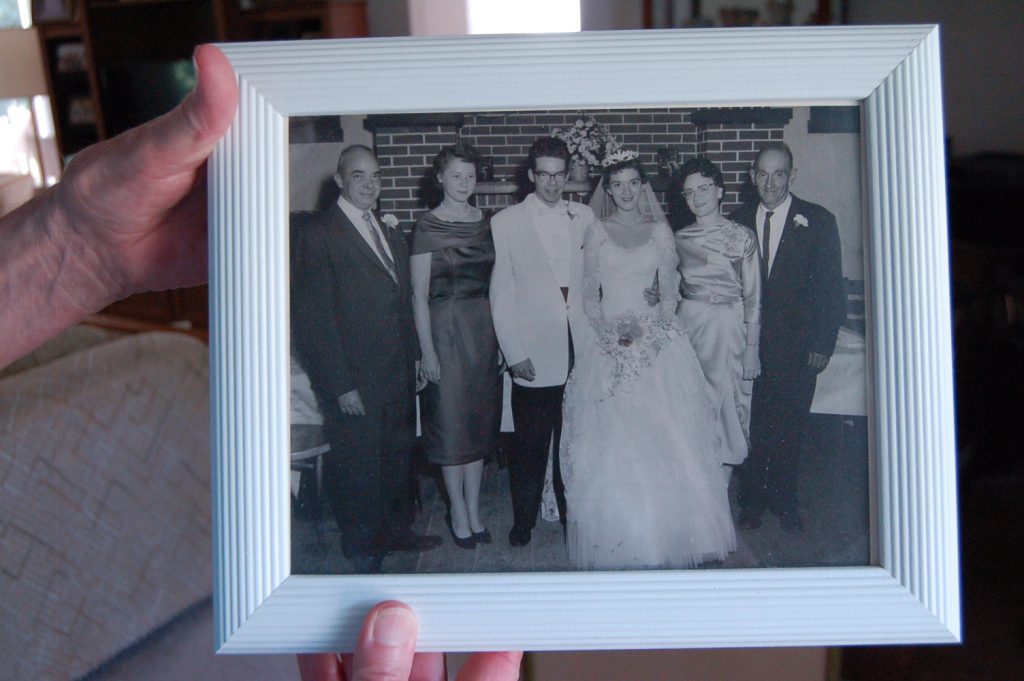
Larry and Shirley's wedding day
Larry holds up a photo from his and Shirley’s wedding day.

The two hit it off — it helped that Shirley wasn’t afraid of flying — and shortly thereafter, they were married. By the next year, they’d had their first daughter Pamela. The year was 1959, and Larry was 24. Three years later, they had their second daughter Robin.


Larry blinked, and suddenly, there he was, sitting on the couch in his Hazelwood home, 30 years old, with a wife and two kids, wondering where the time had gone. “I’d been living my life for other people,” he says. Sure, he’d taken some college classes, had worked as a machinist at McDonnell Douglas for 12-plus years and was raising two daughters. But, he had regrets — neglected hobbies, dreams unfulfilled.

“I felt like there are things I want to do — I’m not sure what they are, but even if I knew what they are, I don’t have time for it,” says Larry. “I kept reminding myself, ‘I don’t want regrets,’ and thought, ‘Well, what am I doing now? Am I wasting time with whatever I’m doing now? Would I regret that I didn’t hike the trails in Rocky Mountain National Park? Would I regret that I didn’t pursue the possibility of flying for a profession?”

So, faced with the culmination of 30 years and the prospect of many more to come, Larry began to take small steps to make sure that, later, he wouldn’t look back on his life in the same way. 

He quit his job at McDonnell Douglas and began taking liberal arts classes at Florissant Valley Community College. He bought an RV and began taking camping trips to the Colorado Rockies with his family. He picked back up with flying, initially taking glider lessons, then instrument flying, and eventually earning his commercial pilot’s license and commercial glider pilot’s license, thanks to the G.I. Bill. 

“I knew whatever I do in my future, it was going to involve aviation, whether it’s a hobby or a job,” Larry recalls. With his licenses in hand, he considered becoming an instructor or managing a glider port or even moving south to become a crop duster. But, the inconsistent schedule and low pay, as well as the hazardous nature of the latter, turned him off. 

Larry Anderson's 1946 Stinson airplane
Larry holds up a photo of he and his wife Shirley in front of his 1946 Stinson airplane.

“I need to have a steady income, and I liked the idea of being home every night — especially with my daughters at home,” says Larry. “I felt like I needed to be home for them, to help raise them.”

So, flying became just a hobby for Larry — and he was OK with that. 


As for making money, Larry had made a promise to himself to no longer do jobs he didn’t enjoy. Work, he realized, didn’t have to be something he was passionate about or that he threw his whole self into — it could simply be a job — but, whatever it was, he wanted to take some satisfaction in it. 

“My dad, he lived for his job — some guys do that. I’m not that excited about the work I did,” Larry says, laughing. “I didn’t live a whole lot for my job, but I’ll do a job that I’m suited to that I’m not gonna be grumpy about every day.” 

With the help of his college classes — ethics, English composition, philosophy, oral communications — Larry was able to clarify his thinking and improve his communication skills. But it was the experience of seeing a psychologist that helped him realize that, contrary to his introverted nature, he actually enjoyed being around and interacting with other people.

“After my visits, I realized I found people to be interesting,” Larry says. “I felt comfortable being out and communicating with people.”

With this knowledge in hand and the newly acquired confidence and skills he gained from his classes, Larry sought out a job that would allow him to interact with the public. He found exactly what he was looking for as a by-state bus driver. 

Although Larry admits it wasn’t a glamorous job, it was the right thing for him.

“It was just what I was looking for — being out with the public. Finally, after all those years, I felt comfortable being with other people,” he says. “I could not have done that job without my visits with the psychologist, nor had I not taken those college classes.”

I could say that I regret that I cannot bicycle anymore, that I cannot play the trombone anymore, but I realize they are things I cannot control.

The experience further pulled Larry out of his shell — “A lot of times, people would just want to visit with me, so they’d sit up in front, and I’d visit with them,” he says — and brought with it many lessons. “Early on, I developed two mottos. One was ‘expect the unexpected’ — that’s people and traffic. Don’t be surprised, keep your cool and just deal with it. You’ll get through it,” Larry says. 

His other motto: “I’m getting paid to have patience.” 

“As a city bus driver, it requires lots of patience. I didn’t realize that before I got the job, but I learned real quick,” he says. “It takes lots of patience, knowing that other people might blame me for something in their words, but actually, they’re upset about their situation.”

Larry took his job, and the safety of the passengers, very seriously and made a fulfilling career out of it, retiring after 23 years. 


At 86, Larry is now in the process of letting go of the things he enjoys: trombone, his RV, his airplane. He no longer has the energy or the good health necessary to play trombone or to camp and hike in the Rocky Mountains or to fly his 1946 Stinson, which he has since sold. 

“I’m in a transition,” Larry says. “I could say that I regret that I cannot bicycle anymore, that I cannot play the trombone anymore, but I realize they are things I cannot control. So, I have no regrets now about having to let go of those things. I did them — they were great experiences. I’m reorienting myself.”  

Larry now spends his time going to lunch with his wife and their friends, re-reading old books and pursuing new hobbies. 

“I really enjoy working on 1,000-piece jigsaw puzzles with easy-listening music on the television,” he says. “It’s just so comfortable to me.”

The knowledge that there are an infinite number of ways he could have lived his life no longer seems important to Larry. He no longer feels nagged by the future or lacks awareness of reality. His regrets are few. His experiences are many. What’s past is past. 

For Larry, it’s all about the moment. 

“The future, I don’t know who knows about all that. All I have is this moment right now, talking with you — and I’m enjoying it,” Larry says, smiling. 


At Anecdote, we believe in the power of stories to connect people with one another and brands. We believe everyone has a story worth telling. Want to share yours or have a tip? Email us at info@weareanecdote.com.