

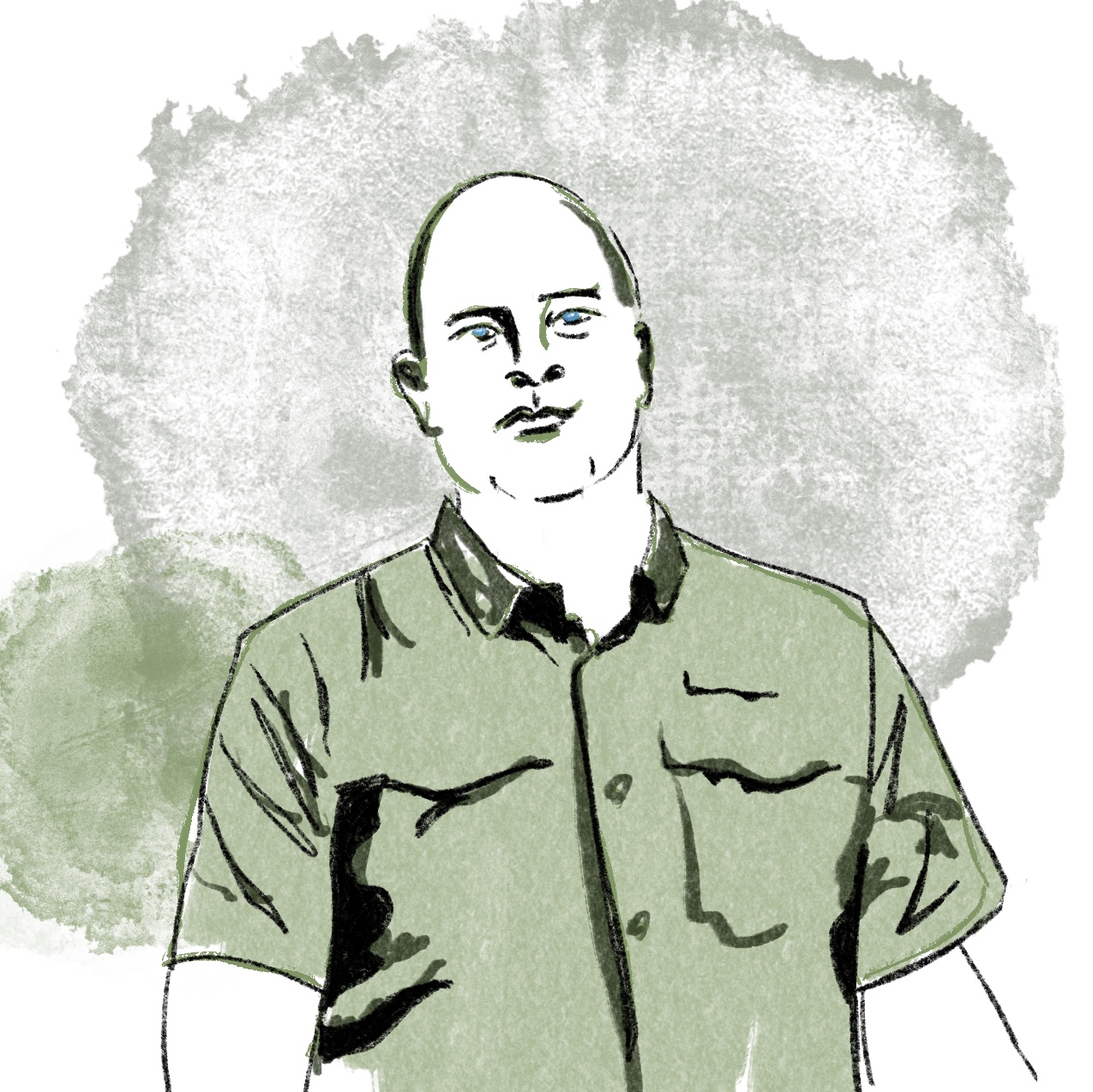
Eric Bausworth’s been called the devil, accused of doing witchcraft. But even he would admit that’s giving him too much credit.
Doing magic now for over 30 years, the 49-year-old magician knows that when he makes a coin disappear or retrieves the correct card from a deck, it’s not real — he’s just doing tricks. (Though he, like most magicians, cringes at that word).
The real “trick,” Bausworth says, is not in getting people to believe, but in having a reason to believe.
“Everybody knows it’s not real,” he says. “The most important thing is what you’re doing it for. It’s not to learn the trick — it’s for the experience of the trick.”
Whether or not you believe in magic is irrelevant, he notes.
“To me, it’s the magic that people create.”
The proprietor of Old Time Magic Shop in High Ridge, Missouri — a small town just southwest of St. Louis — Bausworth is hoping to attract more young people to magic, knowing the positive influence it can have. Afterall, his own fascination with magic began at the age of 15.
It was on a trip to Orlando for a conference for his parents’ work that Bausworth got his first taste. “The conference had a magic theme, and every night you went back to the hotel, there was a magic trick in the room,” he says. He cut his teeth on a trick called Nickles to Dimes. Placing a cup over a stack of nickels, he would “transform” it into dimes.
“When we got home, I started looking up local magic shops to see what was going on,” says Bausworth, “and I found one right up the street.” He began playing around with items he bought at the shop, developing and perfecting his routine. “It was not just working on the trick itself, it was going through and organizing how I was gonna do something, figuring out what the next step was gonna be.”
What drew him to magic, however, wasn’t the “trick,” but its ability to connect people and spark curiosity.
“It’s the mystery. As a magician, we feel that if people walk out trying to figure out the mystery, then we’ve done what we were supposed to do,” Bausworth says.
Pulling people in, allowing them to see, feel and touch the magic is what drew Bausworth to in — and it’s the reason he’s focused his efforts on close-up as opposed to stage or parlor magic. Close-up magic typically involves one to six people and can include things like cards, coins and rubber bands.
“It’s a more close-up, intimate setting versus using a big stage prop or being in a big parlor,” says Bausworth.
The differences, and costs, between each type of magic are vast — for example, buying a deck of cards for $3 or a prop for $3,000 — but to Bausworth, the most important thing is the personal component.
“Almost everything I do, the person I’m doing it for is helping me with it or is touching the trick. Up on stage, you’re not going to have somebody walk up and start touching somebody who’s getting sawed in half,” he says. “You can talk to somebody who does stage magic and they think that if they can make something float across the stage, that’s their power. To me, it’s interacting with the person — for them to get involved.”
This proclivity for personal connection, however, didn’t always come easily to Bausworth.
As a teenager, Bausworth was shy and often kept to himself. Once he became involved in magic, however, that all changed. He found comfort and confidence in perfecting the art — which may be why his parents were so supportive of his new hobby.
“It’s like you flip a switch and it changes you totally,” he says. “I think that’s what people realize when they start doing magic. It’s almost like you become somebody totally different. I wanted it to be like that all the time.”
To this day, Bausworth carries a “trick” with him everywhere he goes to maintain that “comfort zone,” as he calls it, and help break the ice. But the experience of practicing and performing magic, he notes, does more than raise confidence. “You’re bettering yourself for pretty much any kind of situation,” Bausworth notes. “It starts with doing the magic, but it rolls over to everything else.”
The more he did magic, the more he wanted to do it. Bausworth began to spend a couple hours each night practicing. Eventually, he began to fiddle with performing. “Seeing people’s faces and the reaction from them got me more interested in it,” he says, “so I started digging and found out there were local magic clubs.”
Bausworth joined the two clubs he found in his area and, in the process, discovered another local magic shop on the riverfront in downtown St. Louis, called Gibbol’s. “I started going down there every weekend,” he says.
Eventually, he started working there.
For 12 years he worked behind the counter, stocking shelves, doing demonstrations — all the while becoming further immersed in what was then a thriving magic scene. “That’s where I got to know a lot of magicians and a lot of people from out of town,” Bausworth says. “That built up my confidence even more.”
He began performing at picnics and fundraisers two to three times per week while working a full-time job. At the time, restaurants could also be lucrative for magicians. “I went into the Red Lobster and I told them, ‘Look, you always have lines out here — I’ll do magic just to keep people’s patience up.’ He hired me, and I started the next day,” Bausworth says.
Through his 30s, he spent nearly every Friday and Saturday night performing at Red Lobster and other restaurants. Until, one day, the owners of Gibbol’s announced their decision to retire and offered to let him take over the shop. Married with two kids and a full-time job, he passed on the opportunity.
For the next few years, Bausworth put magic on the backburner.
Then, in March 2020, his wife died, prompting him to move his family back to the High Ridge area where he’d grown up and where he’d recently opened an antique store. Covid had hit, putting an end to most forms of in-person entertainment at a time when magic shops were already becoming a thing of the past. But, when a storefront in the same strip mall as his antique store opened up, Bausworth decided it was time to bring magic back to his hometown.
Though few are aware of it, St. Louis was once a thriving magic scene. Notable magicians such as Bud Dietrich, Brother John Hamman, Forrest Hendricks, John Randall Brown, David Price and Jonathan Levit (the creator of The X-Files) all have roots in St. Louis. “Levit’s dad started off doing a lot of magic here in St. Louis, and then he’s the one that taught Jonathan,” Bausworth says.
Magic has been pursued, performed and perfected in the region since as early as the turn of the 20th century. Famed acts such as Harry Houdini could be found wowing crowds at St. Louis’ many theaters — the master of magic himself performing in 1908, what many believe to be, the debut of his famous “Milk Can Escape” at St. Louis’ Columbia theater.
But over time, magic began to, well, lose it’s magic.
“Before Covid, we had probably 45,000 magic shops across the country, and we’re down to about 200 right now,” says Bausworth.
In fact, it’s worse than that. According to FindMagicShops.com, as of December 2023, there were only 97 brick-and-mortar magic shops in all the United States.
The pandemic coupled with generational differences and social media have taken their toll on an industry and pastime that demands what is increasingly hard-earned attention.
“There’s no younger generation that’s moving up, and everybody else is 70 or 80 years old,” says Bausworth. “All the guys I worked with, when I got involved, they’re all getting older and dying off one by one, unfortunately.”
Through Old Time Magic Shop — several doors down from the first magic shop he visited as a doe-eyed magician — Bausworth hopes to change that. He’s begun offering classes where people of all ages can come to learn magic alongside and from other novice magicians.
“Everything’s online now, and people don’t want to buy anything without touching it, seeing it, feeling it. That’s kind of my whole point,” Bausworth says. “I want them to come in, see us do demos, be able to touch and feel it — because you can’t do that online. I think that’s why a lot of kids aren’t getting involved.”
He refuses to tell someone how a trick is done until they’ve bought it, for the simple reason that it takes the magic out of it. Practicing the delivery is essential as well — “otherwise, you’re just exposing the trick,” Baussworth says.
Magic, he believes, is an art, and art takes time. Perfecting a single trick, Bausworth says, can take as long as six months. “A lot of times when somebody sees an effect and then they see how it’s done and they see how simple it is, or it’s not what they expected, that’s a big turn off to them,” says Bausworth. “So you gotta understand the art and what you’re actually getting into.”
Through his Magic Get-togethers, this is what Bausworth is trying to do. He’s bringing people together — those who are inspired to perform (or simply inspired by) magic — to practice, perform, perfect and understand magic — and the reason for it.
“I had a guy that came in one day and he was like, ‘I’ve had the worst day ever’ — because he was just diagnosed with cancer — but he came in, and it totally changed his whole mood. He walked out of here and was like, ‘I’ll be back. This was the best thing I’ve ever seen,’” Bausworth says. “One little trick changed his whole outlook on that day. That’s what I’m looking for.”
Bausworth, like his colleagues, may be a dying breed, but through his shop, he’s keeping magic alive in his own small way — giving people a reason to believe, as he says.
“A lot of people have never experienced what magic really is, other than seeing it on TV. And that’s what magic shops are hopefully going to come back and do,” says Bausworth. “Am I gonna get rich doing this? I’m not. But if I can get people to understand and enjoy magic, that’s what it’s all about.”
Illustration by Abigail Katherine Rose (@abigailkatherinerose).
At Anecdote, we believe in the power of stories to connect people with one another and brands. We believe everyone has a story worth telling. Want to share yours or have a tip? Email us at info@weareanecdote.com.